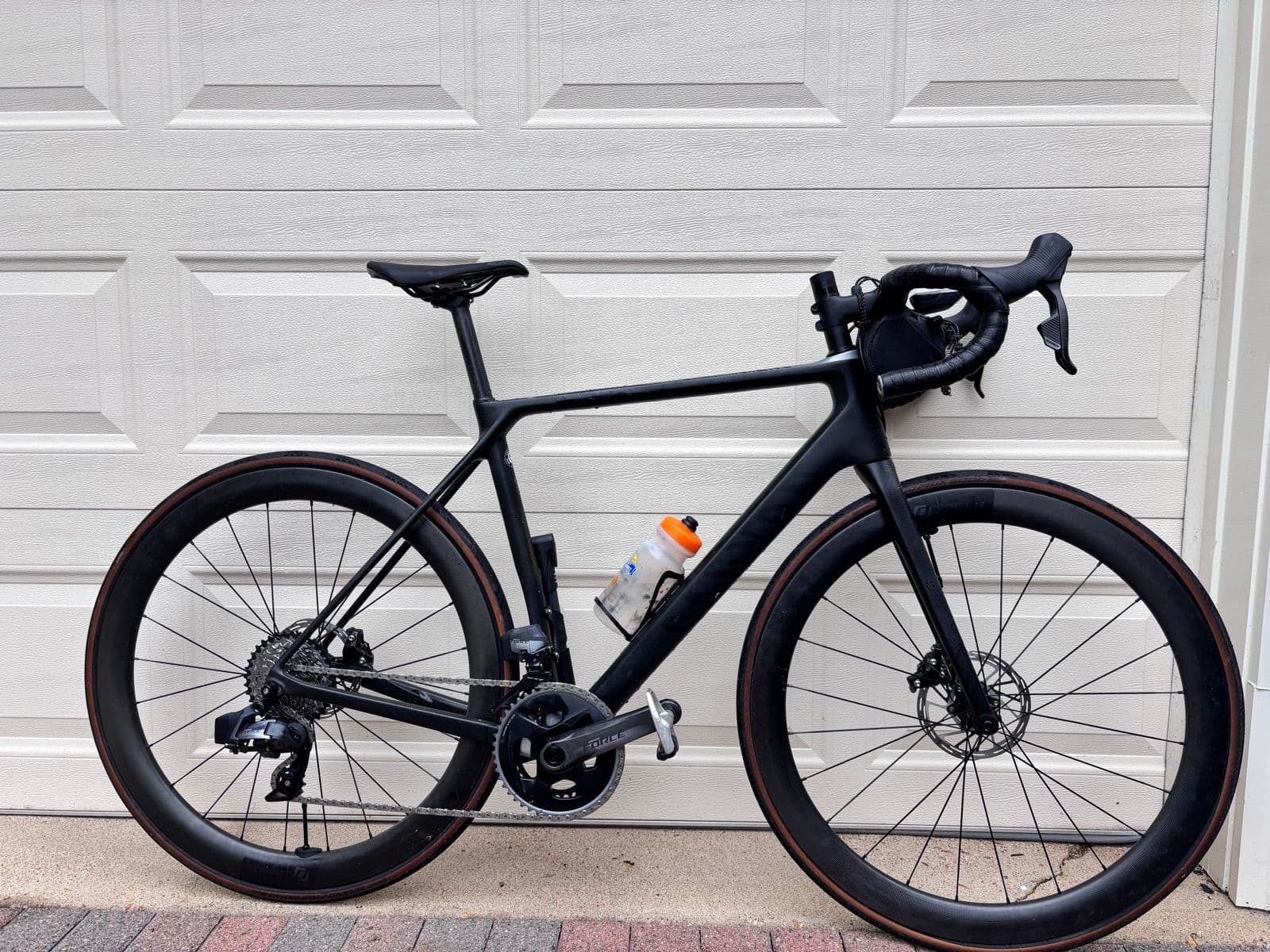
2021 Canyon Endurace CF SLX
Three months sourcing parts, one frameset, and a lot of YouTube rabbit holes. Came out at $2,560. Retail runs ~$7,075.
Longest ride: 100 miles · Typical Saturday: 60 miles · Top speed: 40 mph · Build time: 3 months start to finish
The build
I bought the frameset first and figured out the rest as I went. That's probably not the right order, but it meant I was committed. Over the next three months I pieced together a full SRAM Force AXS build off eBay, Craigslist, and a few lucky forum finds.
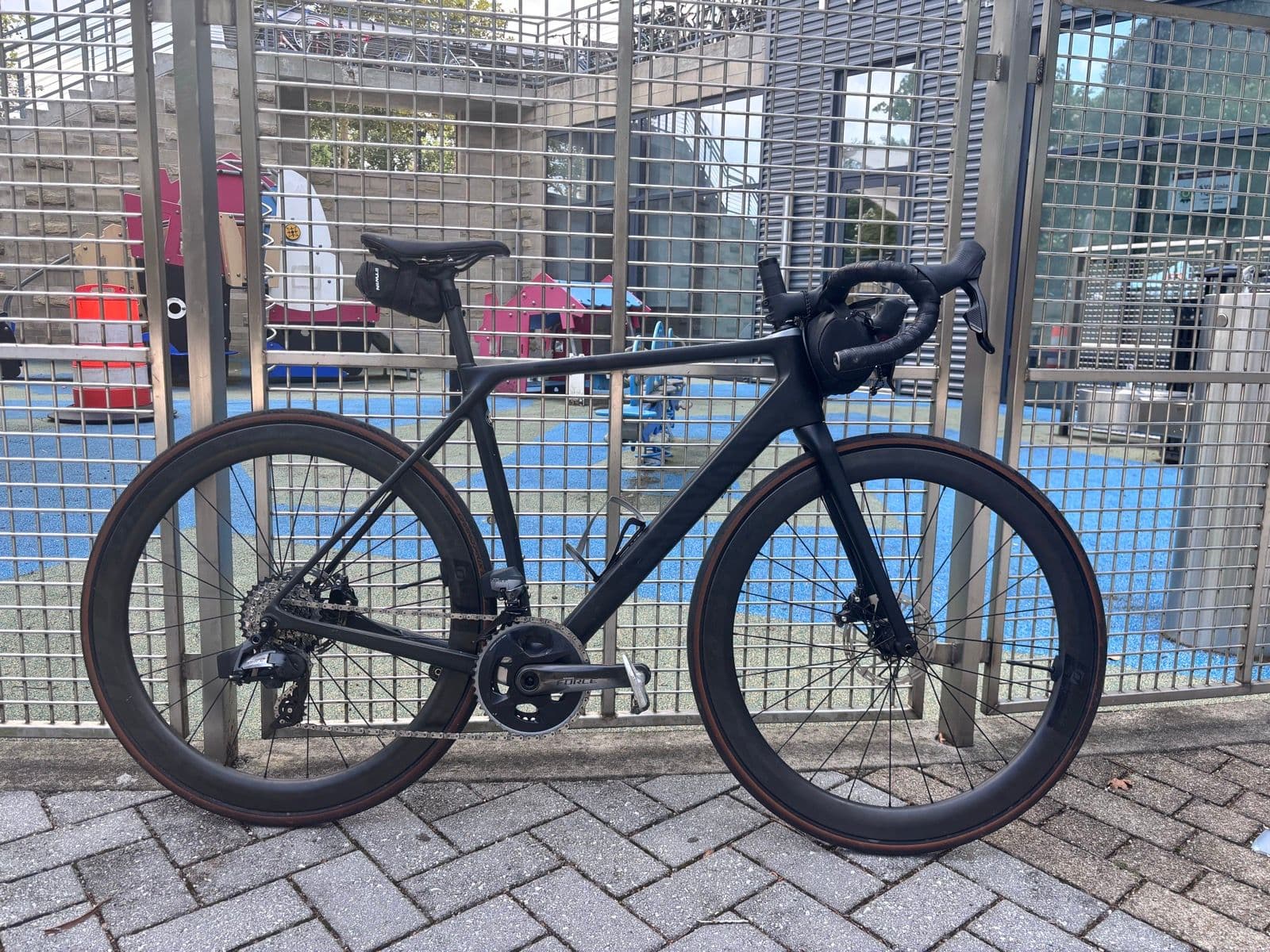
PF30A bottom bracket
The PF30A presses directly into the carbon shell. The thing that causes creaking is the bearing cup faces not sitting perfectly parallel and centered in the shell. If one side seats before the other, the faces are slightly cocked relative to each other and the spindle walks. You need a real bearing press with the right adapters so both cups go in together, square, and fully seated. Bolt-and-washer method gives you no control over this. Learned that the hard way.
Internal cable routing
On this bike cables go through the handlebar, straight into the fork, and down the downtube. No headset ports, no external guides. You're fishing hydraulic hose and an AXS cable through narrow carbon tubes with no line of sight. Thin guide wire taped to the cable end, fed through first, then pull the actual cable through behind it. The handoff between the bar and the fork is the annoying part. Two hours the first time. Worth it for the clean look.
Torque specs on carbon
Every bolt touching carbon has a published Nm limit. Stem face plate: 5 Nm. Seatpost clamp: 5 Nm. I bought a click-type torque wrench specifically for this build. Felt excessive until I looked up what over-torqued carbon fiber looks like. Now I use it every time.
Re-dishing wheels
Disc brake wheels are asymmetric: the rotor side runs lower spoke tension to clear the rotor flange. The Syncros wheels needed re-dishing to sit centered in the frame. Truing stand, dish gauge, quarter-turn adjustments. It's quiet, methodical work. Made me understand that a wheel is just a tensioned structure.
Bleeding SRAM hydraulic brakes
SRAM uses DOT fluid, not mineral oil. DOT is more aggressive than mineral oil; it'll strip paint and irritate skin if you're careless. Nitrile gloves, towels down, work slowly. DOT also takes longer to break in. The bleed itself is straightforward: flush air out of the caliper up through the lever body using SRAM's syringes. Spongy lever means air is still in the line. When it's done right the lever goes from soft and vague to a firm wall of pressure. Hard to miss when you got it.
SRAM eTap AXS
No shift cables at all. Derailleurs pair to the levers over Bluetooth. Limit screws and b-gap are still mechanical, tuned by hand, but indexing happens in the AXS app. The first crisp electronic shift across 12 gears with zero cable stretch to ever tune out is a pretty good argument for the price premium.
The machine
Drag to rotate · click a numbered dot to see the part, what I paid, and what it's worth now
Loading interactive bike...
Gallery