Gait AI: Smart Running Insole
An AI-powered smart insole that detects foot pressure in real time and flags form issues before they cause injury.
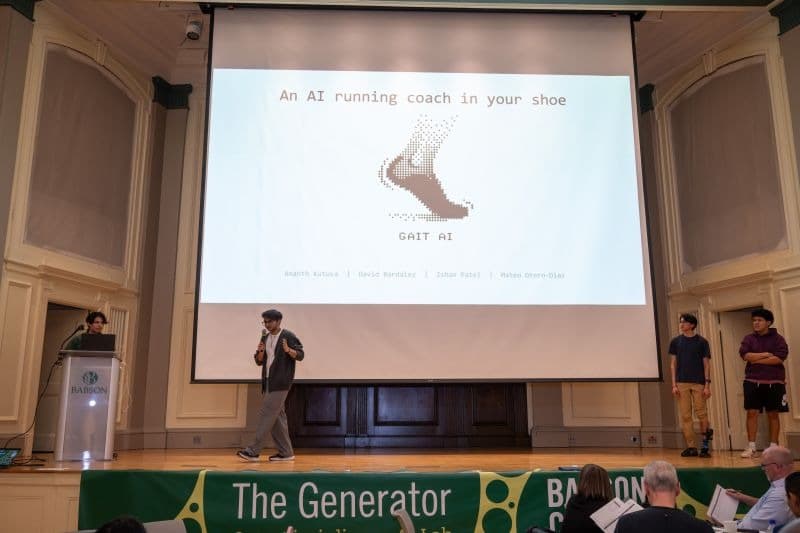
🏆 Winner, The 2026 Spring Generator Buildathon @ Babson College
Overview
Gait AI is a smart insole system that detects pressure distribution across your feet in real time and flags form issues before they cause injury. We built a working hardware prototype, a fully deployed web app, complete market research, a GTM strategy, and unit economics projected months out, all in a single ten-hour sprint.
Favourite question from the judges: "Did you really build this in a day?"
Technical Architecture
The system is a full hardware-to-software pipeline built from scratch during the hackathon:
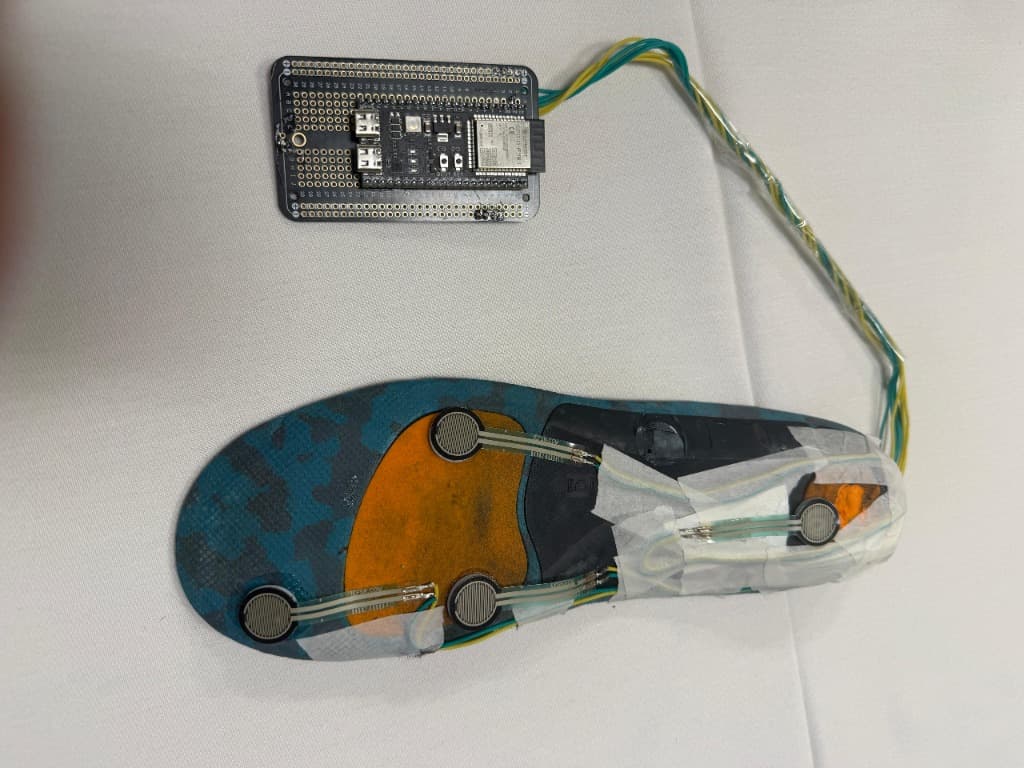
- Force-Sensitive Resistors (FSRs): Multiple FSR sensors are mounted at key pressure points on the insole (heel, ball of foot, and toe) to capture the full pressure distribution during a stride.
- Protoboard & ESP32 Microcontroller: The FSRs are soldered onto a custom protoboard wired to an ESP32 module. The ESP32 reads analog voltage from each sensor through its ADC channels, converting pressure into digital values.
- Arduino Backend Processing: Custom Arduino firmware on the ESP32 handles sensor calibration, data smoothing, and packages pressure readings into structured data transmitted over Bluetooth Low Energy (BLE).
- Next.js App Frontend: A mobile-first web application built in Next.js receives real-time pressure data from the ESP32 via BLE, visualizes foot strike patterns through a live coaching interface, and flags gait asymmetry to reduce injury risk.
Hardware Design
The physical prototype was designed to be wearable and functional for live demonstration:
- FSR sensors at three contact points on the insole: heel, ball of foot, and toe
- Custom protoboard layout to shorten wire runs and keep signal integrity from the analog sensors
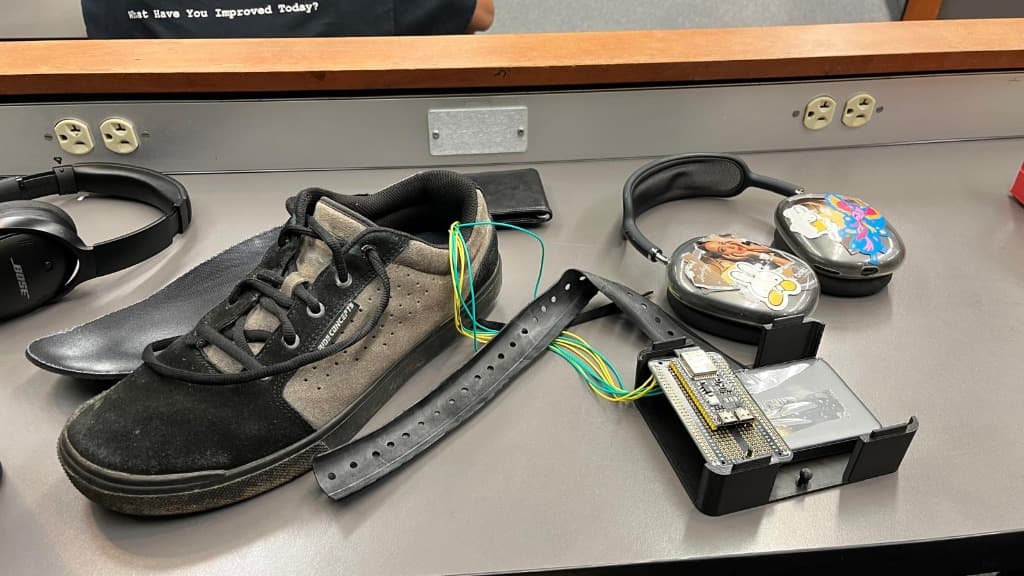
- ESP32 mounted in a 3D-printed enclosure with an adjustable strap for ankle attachment
- Multi-conductor ribbon cable connects the insole sensors to the ankle-mounted processing unit
- The full assembly fits inside a standard shoe
Tech Stack
- Microcontroller: ESP32 (Wi-Fi + Bluetooth LE capable)
- Sensors: Force-Sensitive Resistors (FSRs) at heel, midfoot, and toe zones
- Firmware: Arduino (C++), sensor calibration, data smoothing, BLE transmission
- Mobile App: Next.js, BLE data receiver, real-time visualization, gait analysis
- Enclosure: 3D-printed ankle-mount housing with adjustable strap
- Prototyping: Custom protoboard, soldered connections, ribbon cable harness
Results & Awards
🏆 Winner
The Generator Buildathon
10 Hours
Concept → Working Prototype
500+
Students from 30+ Colleges
Delivered a complete end-to-end product in a single day: working hardware prototype with live sensor data, a deployed app, market research, GTM strategy, and projected unit economics. Competed against 500+ students from over 30 colleges for $15k in prizes, sponsored by Anthropic, OpenAI, WHOOP, HubSpot, ElevenLabs, Cursor, and more.
Project Media

Links
Tools & Methods
Built in 10 hours at The Generator Buildathon @ Babson College.