Canary: YHack Environmental Monitor
Real-time low-cost environmental gas detection and hazard mapping for mining safety.
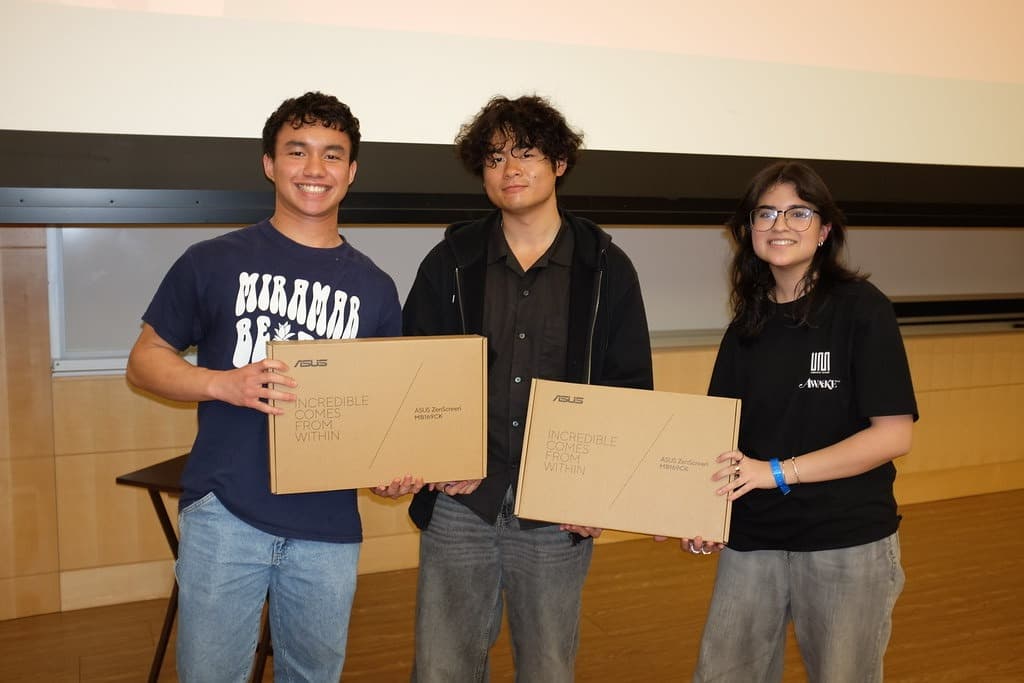
🏆 3rd Place, ASUS Societal Impact Track | 4th Place, QNX Hardware Track | YHack Spring 2026
Overview
Canary is a real-time, low-cost environmental monitor built at YHack, Yale's premier hackathon. Much like the namesake inspiration, the canary in the coal mine, the system protects miners in developing countries from the dangers of carbon monoxide, methane, and other hazardous gas exposure. Going further than just detection, Canary uses a Raspberry Pi and Intel RealSense depth camera pipeline to map out areas of gas exposure within the greater mine layout and predict its spread to improve safety.
Inspiration
The Dominican Republic has some of the largest mineral reserves in North America. Mines employ 1% of the working population but are responsible for 8% of workplace deaths. One of the main causes is scentless gases like methane and carbon monoxide. In the US, this isn't as significant an issue because of sensor networks, but in developing countries like the Dominican Republic, these sensor systems are simply too expensive. Canary was built to change that.
How It Works
The system operates in a continuous loop to ensure real-time responsiveness:
- Gas sensors (MQ-series) and the DHT11 humidity sensor constantly collect environmental data from the surroundings.
- The system compares incoming readings against predefined safety thresholds for gas concentration and humidity levels.
- If conditions are safe, monitoring continues. If thresholds are exceeded, the system triggers alerts and updates a hazard map to reflect dangerous zones and predicted gas spread.
- This cycle repeats continuously and keeps the hazard map current.
Tech Stack
- Compute: Raspberry Pi 4 Model B
- Sensors: MQ-series gas sensors (CO, methane), DHT11 humidity sensor
- Vision: Intel RealSense depth camera module for tunnel geometry mapping
- Software: Python pipeline for real-time data processing, threshold detection, and hazard visualization
- Dashboard: Web-based real-time monitoring dashboard (HTML/CSS/JS)
My Contributions
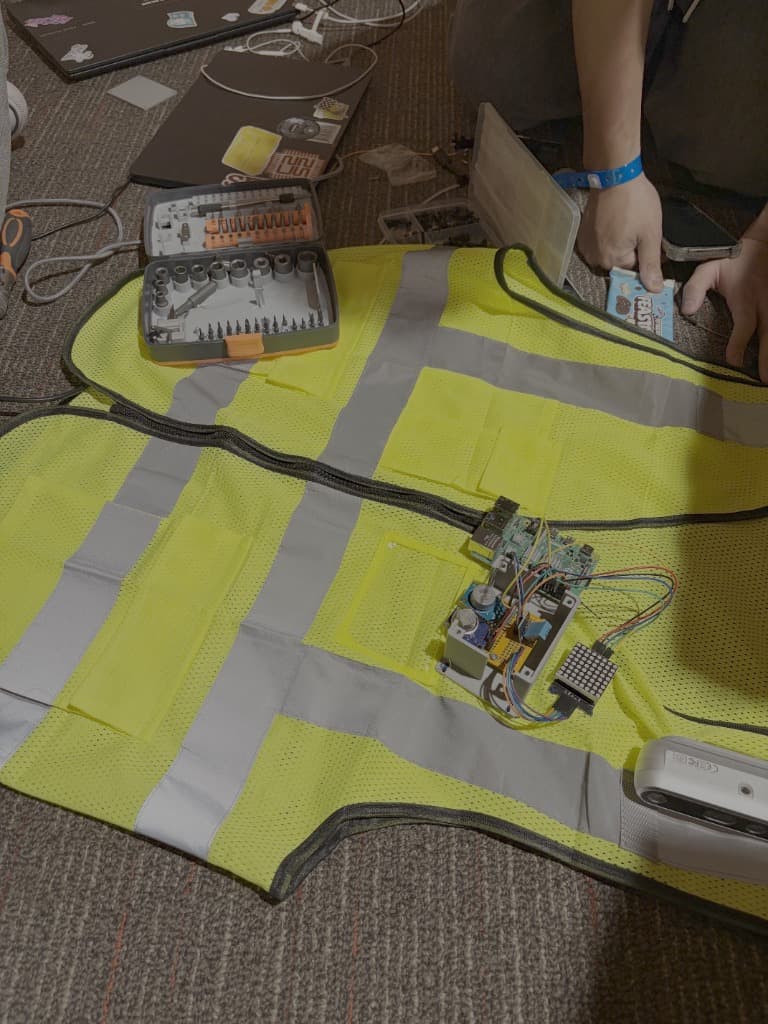
As the only mechanical engineer on the team, I designed the housing and mounts that let the electronics do their job. The work centered on adaptable mounting rather than fixed mechanical parts.
- Designed and fabricated the housing and sensor mounts for the wearable vest
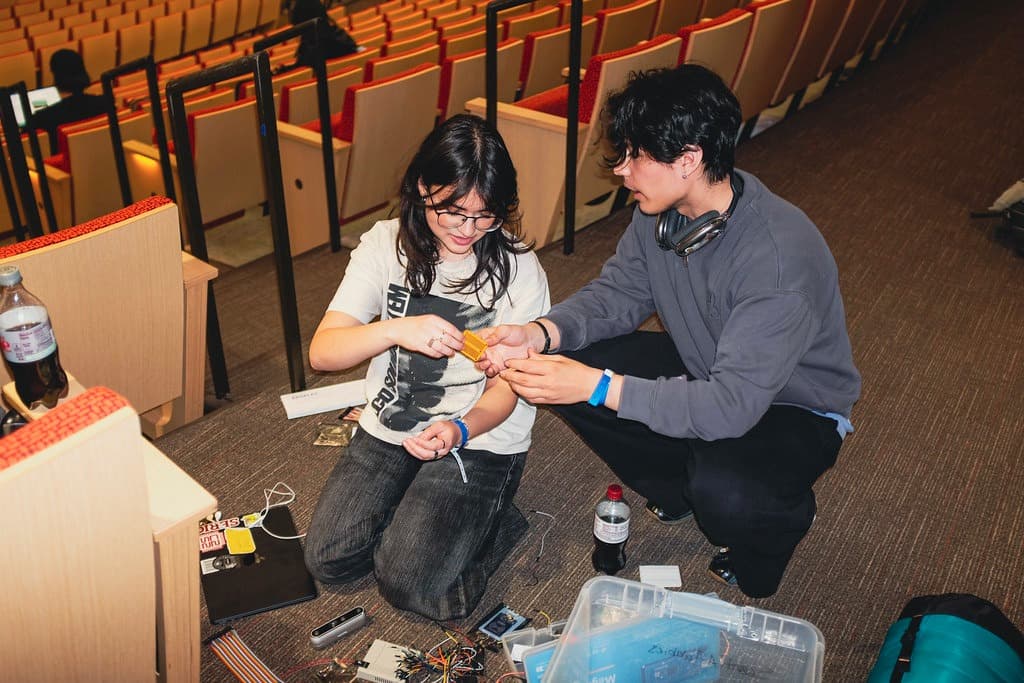
- Built mounts that let the team reposition sensors quickly
- Integrated the circuit board, sensor array, and depth camera into a high-visibility safety vest
- Tested the wiring and mounts to survive handling during the demo
Challenges
- Integrating and interfacing with the depth camera module under hackathon time constraints
- Extensive circuit validation including continuity checks, waveform analysis, and oscilloscope measurements
- Designing and executing test cases to verify system functionality across multiple sensor types
- Simplifying the dashboard UI for clarity during live use
Results & Awards
3rd Place
ASUS Societal Impact Track
4th Place
QNX Hardware Track
Got a real-time gas and humidity monitoring system up and running from scratch. Successfully connected all sensors to a Raspberry Pi and built a live data pipeline. Added hazard detection with automatic alerts and built a simulation to visualize how gas spreads through tunnels, then used that data to predict potential danger zones.
Project Media
What's Next
- Scale into a distributed network of low-cost sensors across mines for broader coverage
- Move to a custom PCB: smaller, cheaper, and easier to manufacture
- Integrate a lighter power supply for extended field deployment
- Enable predictive alerts and automated emergency response protocols
Links
Tools & Methods
Built at YHack (Yale) over a weekend hackathon sprint.